

Workshop
The Future of Consciousness Research
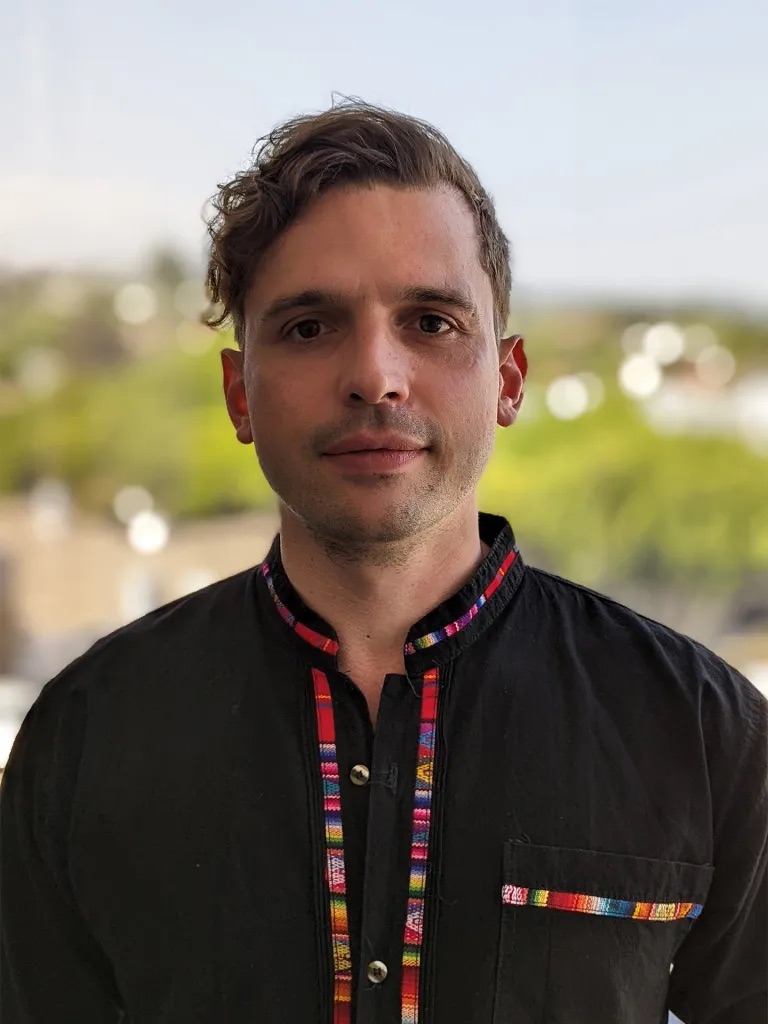
Leonardo Christov-Moore, Ph.D.
Email hidden; Javascript is required.
www.advancedconsciousness.org
www.instagram.com/iacslab
Yes - I have my ticket and camping
Moderator:
Leonardo Christov-Moore is a cognitive neuroscientist and theorist who has studied the mechanistic underpinnings of prosociality for over a decade, to answer the fundamental question: “Why and how do entropy-defying, world-modeling, self-maximizing systems nonetheless exhibit radically other-oriented preferences?”. After undergraduate work on the affective origins of prosocial behavior in collaboration with Scott Huettel at Duke University, he obtained his Ph.D. at UCLA under the supervision of Marco Iacoboni, investigating the role of “mirroring” and cognitive control in motivating altruism via functional neuroimaging and causal tests via image-guided neuromodulation. His postdoctoral work under Jonas Kaplan and Antonio Damasio reinforced the role of affective and embodied processes and vulnerability in motivating other-oriented behavior, culminating in a pivotal work on guidelines for artificial empathy, published in Science Robotics in 2023 (Christov-Moore et al., 2023), as a follow-up to Man and Damasio’s work on ‘Feeling Machines’ published in Nature Machine Intelligence (Man and Damasio, 2022). He has conducted multiple large-scale scientific projects, from work on tactile processing in the hippocampus with Miguel Nicolelis at Duke University, to graduate and post-graduate work with Marco Iacoboni at UCLA on mechanisms of prosociality, to post-doctoral work under Nanthia Suthana at UCLA on memory augmentation via wireless deep-brain stimulation, and Jonas Kaplan at USC on affective processes in global intelligence. He currently leads E4, a 3 year, 1m project aimed at non-pharmacologically emulating non-ordinary psychedelic states to engender self-transcendence, at the Institute for Advanced Consciousness Studies.
Panelists:
Adam Safron dedicated education to understanding the natures of intelligence/mind after reading The Singularity is Near by Ray Kurzweil in 2000. His academic career has focused on the evolutionary-developmental and mechanistic bases of preferences (and their modifications), with a side focus on the cognitive neuroscience of meditation, and more recent work on computational models of psychedelics and altered states of consciousness/selfhood. Inspired by this past work, he is currently pursuing a research program along with collaborators at IACS on preference formation with AI agents whose architectures are inspired by computational models of ‘consciousness’. Additionally, along with some of the world's leading thinkers in cognitive science and AI, He is also organizing a special issue of Royal Society on how a more detailed conceptualization of “world models” could help us understand the capabilities of natural and present/future artificial intelligences. He is presently seeking to found an applied AI company for eldercare, which may provide a scalable solution for developing increasingly advanced, human-aligned Ais, and solve many (if not most) of the inner- and outer- alignment problems facing humanity.
Nicco Reggente, Ph.D. is a neuroscientist and co-founder of the Institute for Advanced Consciousness Studies where he currently serves as Principal Investigator. The overarching theme of his research is the development of neuroimaging-informed, personalized neurotechnology to help individuals achieve desired outcomes. Nicco’s research has spanned the domains of memory, consciousness, and psychiatric disorders. His current focus is on leveraging immersive technology to induce maximally beneficial qualia (e.g. meditative, entheogenic states) that can be captured and re-instantiated via neurofeedback. Dr. Reggente is passionate about creating research environments that combine academic rigor with startup culture, permitting for rapid deployment of empirically validated and ecologically valid neurotechnology. He currently serves as Principal Investigator on all research projects at IACS.
Dr. Pamela Douglas is a distinguished researcher whose remarkable resume showcases her groundbreaking contributions to neuroscience and brain development. With a strong educational background and extensive work experience, she has made significant strides in unravelling the mysteries of the human brain. Pamela's educational journey commenced at Johns Hopkins University, where she earned her Bachelor of Science degree in Biomedical Engineering & Math. This interdisciplinary program provided her with a solid foundation for her subsequent academic pursuits. She then pursued a Master of Science in Bioengineering at the University of Pennsylvania, further honing her research skills in the intersection of engineering and biological sciences. Recognizing her passion for computational neuroscience, Pamela continued her academic journey at UCLA, where she completed her Doctor of Philosophy program in Neuroengineering. This rigorous program equipped her with the necessary tools to delve deeper into the complexities of brain computation. Throughout her career, Pamela has worked with renowned institutions that share her dedication to neuroscience research. Notable positions include her role as a Computational Neuroscientist at the David Geffen School of Medicine at UCLA, a Postdoctoral Fellow at UCL's Wellcome Trust Centre for Neuroscience, and a Klingenstein Third Generation Fellow at UCLA. She has also contributed to the field of space medicine as a National Space Biomedical Research Fellow at NASA's Johnson Space Center. Pamela's research primarily focuses on building brain computational models, studying neuroimaging of attention, and utilizing transcranial ultrasound to investigate 1/f spectral patterns. Her innovative approach challenges conventional understanding and has paved the way for more effective medical and academic interventions in brain development.
George Deane is a philosopher and cognitive scientist and currently a postdoctoral researcher working with Prof. Yoshua Bengio on the possibility of artificial consciousness and the dangers posed by artificial agents. He conducted his PhD research on the ERC funded XSPECT project at the University of Edinburgh, under the supervision of Professor Andy Clark, a leading philosopher of cognitive science and expert in active inference. He has an extensive track record on self-modeling, and self-transcendence. His PhD thesis The Shape of Subjectivity: An active inference approach to consciousness and altered self-experience addressed the nature of consciousness and the sense of self within the active inference framework — the most formally articulated of ‘predictive processing’ approaches to understanding the brain.
George has a number of key publications directly related to this project: He has developed a novel account of the sense of self and consciousness within the active inference framework. Dissolving the self delivered an account of the phenomenology and therapeutic effects of experiences of ‘selflessness’ occasioned by psychedelics (Deane, 2020). Losing Ourselves gives an account and contrastive analysis of selflessness experienced in depersonalisation disorder and meditation (Deane et al., 2020). Machines that feel and think make a case for the function ‘function of self-modeling for general intelligence in biological systems and the implications for creating artificial general intelligence (Deane, 2022). In collaboration with Yoshua Bengio and colleagues at MILA: Consciousness in artificial intelligence is a large-scale report with leading experts in the field on the possibility and potential ingredients of consciousness in artificial intelligence (Butlin et al, 2024). ‘Sources of richness and ineffability’ approaches the function of consciousness from a machine learning perspective, where the function of consciousness is to collapse high dimensional state spaces into compressed representational formats (Ji et al, 2024). The computational unconscious introduces a computational articulation of ‘adaptive narrative control’, an adaptive computational mechanism of evidence selection which may be the common underlying mechanism underlying psychopathology. This paper also considers how self-transcendent experiences (through meditation or psychedelics) can lead a system out of rigid local optima and facilitate well-being and flourishing (Deane et al., 2024).
Daphne Demekas is a machine learning engineer particularly interested in biological models. She has worked at the University of Arizona at the Wheeler Lab, studying computational biology models of protein sequencing. She has experience as a backend software engineer in financial technology as well as computer vision experience, mainly object and pose detection, as well as experience with transformer architectures such as DALL-E, and is currently working at Imperial College London on a variety of subjects in Artificial Intelligence.
Janis Hesse is a computational neuroscientist, who obtained his Ph.D. in Computation and Neural Systems at Caltech. One of his major interests is the binding problem, one of the deepest mysteries of the brain: Since different features like colour, motion and shape are computed in parallel by independent processing streams, how can the brain bind them together to create the unifying conscious experience of an object?
In the Tsao lab he and colleagues proposed the “Silhouette-based Selection Hypothesis” to solve the binding problem and give a mechanism of how objects become the universal information unit selectable by attention, actions, and thoughts. His work combines fMRI-guided electrophysiology in monkeys and rodents with theoretical modeling to test this and other hypotheses around perception and consciousness.
The Future of Consciousness Research
90 minutes
We will conduct a panel from some of the most brilliant researchers studying consciousness today.
We will cover subjects such as:
The neuroscience of mystical experience
Targeting specific brain receptors to create tailored conscious states
The role of belief in bodily function
Neuroscientific accounts of self-transcendent experiences
What psilocybin can tell us about perception
Using neurofeedback to bring people to desired mental states
What hypnosis tells us about belief and the brain
New theories of trust in the natural world
and more...
All ages, with an interest in neuroscience, psychedelics, meditation, and AI.
- Saturday (4/6) 11am-3pm
- Saturday (4/6) 3pm-7pm
- Sunday (4/7) 11am-3pm
- Sunday (4/7) 3pm-7pm
AMAZING!! This is all I need!